How to Tell If Lawn Insects Are Damaging Your San Antonio Yard
Hot, bright San Antonio summers can turn a small pest problem into dead patches fast. If you have noticed thin, straw-colored areas that spread a little each week, you may be seeing signs of lawn pest damage in San Antonio. When you want a quick, professional confirmation and a plan to stop it, schedule targeted lawn pest control with Lawn Control of Texas.
For a deeper look at the most common warning signs around our city’s St. Augustine, Bermuda, and Zoysia lawns, keep reading. You can also explore more about our lawn services in San Antonio right on our site if you prefer a quick overview.
What Lawn Pest Damage Looks Like In San Antonio
Most turf insects don’t show up all at once. They start in predictable places, then the damage “bleeds” outward as they feed. In neighborhoods like Stone Oak, Alamo Heights, Shavano Park, Helotes, and Westover Hills, we often see these patterns during late spring through early fall.
- Edges that cook: Thin, yellowing bands along driveways, sidewalks, or sunny curb strips often point to chinch bug feeding that begins in the hottest spots.
- Spongy pull-up: Areas that feel springy or peel up like carpet usually indicate grub feeding on roots beneath the surface.
- Chewed blades overnight: Ragged, “windowpaned” grass tips that appear after dusk suggest caterpillar pests such as sod webworms or armyworms.
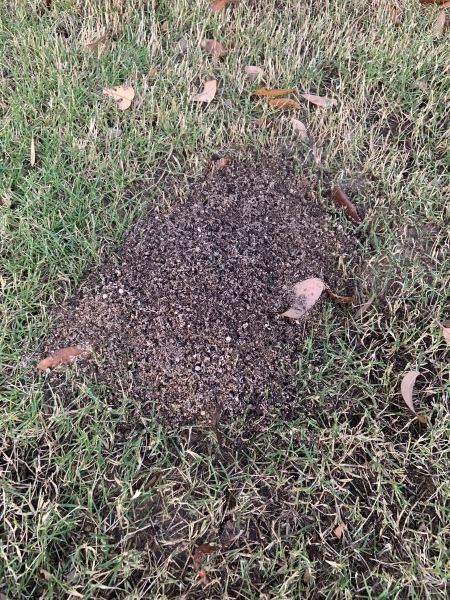
- Mounds after rain: Fresh fire ant mounds near patios, play sets, or stepping stones can stress turf and create bare halos over time.
Healthy lawns don’t suddenly collapse in small, irregular islands. When patches expand from a hot edge, when sod loosens underfoot, or when chewed tips show up seemingly overnight, it’s time to get a professional inspection.
Common Lawn Insects That Kill Grass In Texas
Chinch Bugs
Chinch bugs are San Antonio’s classic summer lawn destroyer, especially in St. Augustine. Damage starts as faint yellowing on the sunniest, hottest edges, then shifts to straw-brown. The living edge looks ragged, not clean like a mower cut. If you watch the same spot for a few days and it keeps creeping outward from concrete or rock, chinch bugs are high on the list.
White Grubs
Grubs feed on roots, so blades wilt even when soil looks moist. Birds pecking the lawn, small roll-back “sheets” of turf, and spongy footing are telltale. Grub damage often shows up after soil warms, then accelerates when rain follows heat. The grass doesn’t rebound because roots are gone.
Armyworms
These fast-moving caterpillars chew blades and can march across sunny sections after late-summer rains. Look for thin “windowpanes” on leaves and scattered green pellets. Homeowners often say the lawn looked fine on Friday and rough by Monday.
Sod Webworms
Webworms create small, chewed patches that multiply in warm, wet-to-hot swings. Blades look clipped short and ragged. Night activity and quick spread across open, well-lit turf are common clues.
Fire Ants
While fire ants don’t typically “eat” turf, their tunnels and frequent relocations stress roots and thin grass near mounds. After big summer storms, new mounds can appear within a day. Keep kids and pets away from active mounds because stings can escalate quickly.
Local insight: In San Antonio, reflected heat from curbs, stone patios, and driveway edges creates hotspots where chinch bug damage starts first. After heavy rain, expect fresh fire ant mounds within 24–48 hours, especially near concrete and play areas.
St. Augustine Grass: Why It Gets Hit Hard
San Antonio’s front yards often feature St. Augustine for its dense, barefoot-friendly feel. It is also a favorite target for chinch bugs. On St. Augustine, early pest injury looks like pale, straw-colored blotches that trace along sidewalks, mailbox strips, or south-facing edges. Because this grass spreads by stolons, damage can look like a lopsided patchwork as pests race along those runners.
If you care about a thick St. Augustine lawn for shade and play, consistent monitoring matters. Many homeowners search for “lawn pest control for St. Augustine grass” because once chinch bugs get established, the recovery period stretches and weeds rush into the thinned sections. When you want a clear answer and a plan built for our heat, lean on local yard insect treatment from a pro.
Insect Damage Or Something Else?
Heat, fungus, and irrigation issues can mimic insect symptoms. A careful read of the pattern saves time and prevents the wrong fix.
- Disease vs. insects: Fungal problems often make circular rings or uniform blotches and flare after humid nights. Insects create irregular, expanding edges that look chewed. If patterns feel “too perfect,” consider disease and learn how targeted care helps through lawn disease treatment.
- Drought vs. insects: Drought stress shows across whole zones or high spots, not just along one hot seam. Footprints may linger, but blades won’t look nibbled.
- Weeds filling in: After insects thin turf, opportunistic weeds sprint into the gaps. Timing matters for cleanup, and this guide on the best time to apply weed control in Texas explains why San Antonio schedules shift with weather.
If the lawn looks worse after a week of normal watering, edges keep widening from concrete or rock, and blades seem chewed rather than simply wilted, insect pressure is likely. That is the moment to bring in a licensed team for confirmation and a treatment plan.
How Damage Progresses Across San Antonio Neighborhoods
Across the North Side and Hill Country edge, thin, rocky, and alkaline soils heat up quickly. Chinch bug injury starts early along sun-baked curb strips, then follows the heat line up the driveway. In flatter pockets toward Leon Valley or near Westover Hills, standing water after bursts of rain can set up a different pattern. Grub injury sneaks in as soil warms, then birds and raccoons make a mess while hunting larvae.
Late-summer weather whiplash also drives caterpillar outbreaks. A stormy week can be the spark; a quick heat rebound finishes the job. When you see chewed tips and green frass scattered around after mowing, you’re likely dealing with webworms or armyworms that ramped up after rainfall.
Why Fast Confirmation Beats Waiting
Pest life cycles move in weeks, not months. That’s why a patch that barely showed last weekend can triple in size by next weekend. Quick identification protects living grass on the edge of the damage and limits how far insects travel. It also prevents “double trouble,” where thinned turf invites weeds to colonize the same spot two weeks later.
Once a section goes fully straw-brown and the crowns die, that turf won’t green up again. The goal is to act while the edge is still alive so it can recover. That’s where a focused, local plan makes the difference.
When To Call A Pro In San Antonio
Call Lawn Control of Texas if you notice any of the following across St. Augustine, Bermuda, or Zoysia lawns:
• Patches that spread from concrete or rock edges over 3–7 days
• Turf that lifts easily or feels spongy underfoot in warm soil
• Chewed or “windowpaned” tips showing up after dusk
• Fresh fire ant mounds near patios, play sets, or curb strips after storms
A trained tech will read the pattern, check the thatch and crown, and confirm what is active today. Then you get a plain-English plan to protect the healthy edge, reduce pest pressure, and help the lawn rebound. While many problems peak in hot months, winter and shoulder seasons matter too, because recovery and prevention are easier when pressure is low. For a season-by-season look at prevention, this short read on why fertilization matters more in hot climates explains how steady nutrition supports pest resilience.
Your Next Step: Protect Your Yard With Local Lawn Pest Control
You don’t have to guess what’s chewing your lawn. If you’re seeing the signs above in Alamo Ranch, Stone Oak, Alamo Heights, Shavano Park, or anywhere in greater San Antonio, get a fast inspection and a proven plan from a local team. Start with professional lawn pest control designed for our heat, soils, and neighborhood microclimates, and enjoy a yard that stays greener through the tough months.
Ready to talk it through? Call 210-881-7553 to connect with Lawn Control of Texas. We’ll confirm the cause, outline clear steps, and time service around your schedule so you can get back to enjoying the lawn.

Locally Owned
Community Focused
Clear Communications